


Most people think biophilic design means adding a few plants and calling it done.
But here’s the truth:
Some of the most dysregulating hospitality spaces are filled with greenery.
Because biophilic design isn’t about plants alone.
It’s about how the human nervous system responds to space.
If you’re a hospitality owner-operator shaping experiences of connection, comfort, or belonging, whether through a restaurant, retreat center, or boutique hotel, understanding biophilic design can radically improve how guests feel the moment they arrive.
This beginner’s guide explains what biophilic design means, why it matters in hospitality, and how to apply biophilic design principles in real, practical ways, without a major renovation or large budget.
What Is Biophilic Design?
Biophilic design is an approach to architecture and interiors that reconnects people with nature through the built environment.
The concept is rooted in biophilia, a term popularized by biologist Edward O. Wilson, which describes our innate human tendency to seek connection with nature and living systems.
Later, environmental researcher Stephen R. Kellert expanded this idea into what we now call biophilic design, applying nature-based principles to buildings, interiors, and hospitality spaces.
Biophilic design is not:
- A decorating style
- A trend
- A wellness aesthetic
Biophilic design is:
- A way to support human well-being through space
- A framework for designing with the body and nervous system in mind
- A powerful tool for improving guest experience in hospitality environments
Why Biophilic Design Matters in Hospitality Spaces
Hospitality spaces—restaurants, hotels, retreats, cafés—are never neutral.
Guests experience your space physically and emotionally before they experience it visually. Their nervous system is constantly assessing:
- Do I feel welcome here?
- Do I feel at ease?
- Can I relax or stay present in this environment?
Research consistently shows that nature-connected environments:
- Reduce stress and anxiety
- Improve mood and focus
- Support emotional regulation
- Increase feelings of comfort and belonging
A well-known study by Roger Ulrich found that hospital patients with views of nature recovered faster and required less pain medication than those without. If nature can support healing in healthcare settings, imagine its impact on hospitality design, where guests come to gather, eat, rest, and connect.
For owner-operators, biophilic design becomes part of your guest care strategy—even when you’re not physically present.
Biophilic Design for Owner-Operators (Not Designers)
You don’t need to be a designer to apply biophilic design principles.
In fact, owner-operators are uniquely positioned to do this well—because your space reflects your values.
Biophilic design helps hospitality businesses:
- Feel welcoming instead of overstimulating
- Encourage ease, flow, and comfort
- Support nervous system regulation
- Create memorable, embodied guest experiences
This is about how your space feels, not just how it looks online.
The Three Core Principles of Biophilic Design
(With Hospitality-Focused Action Steps)
1. Direct Connection to Nature
This includes:
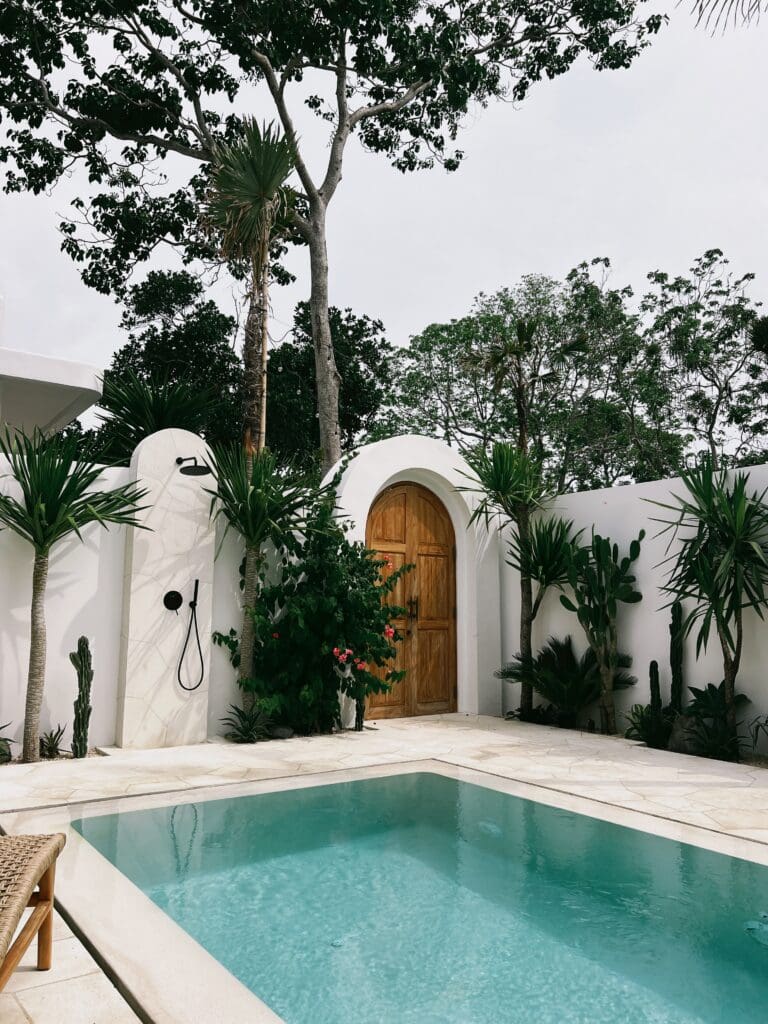
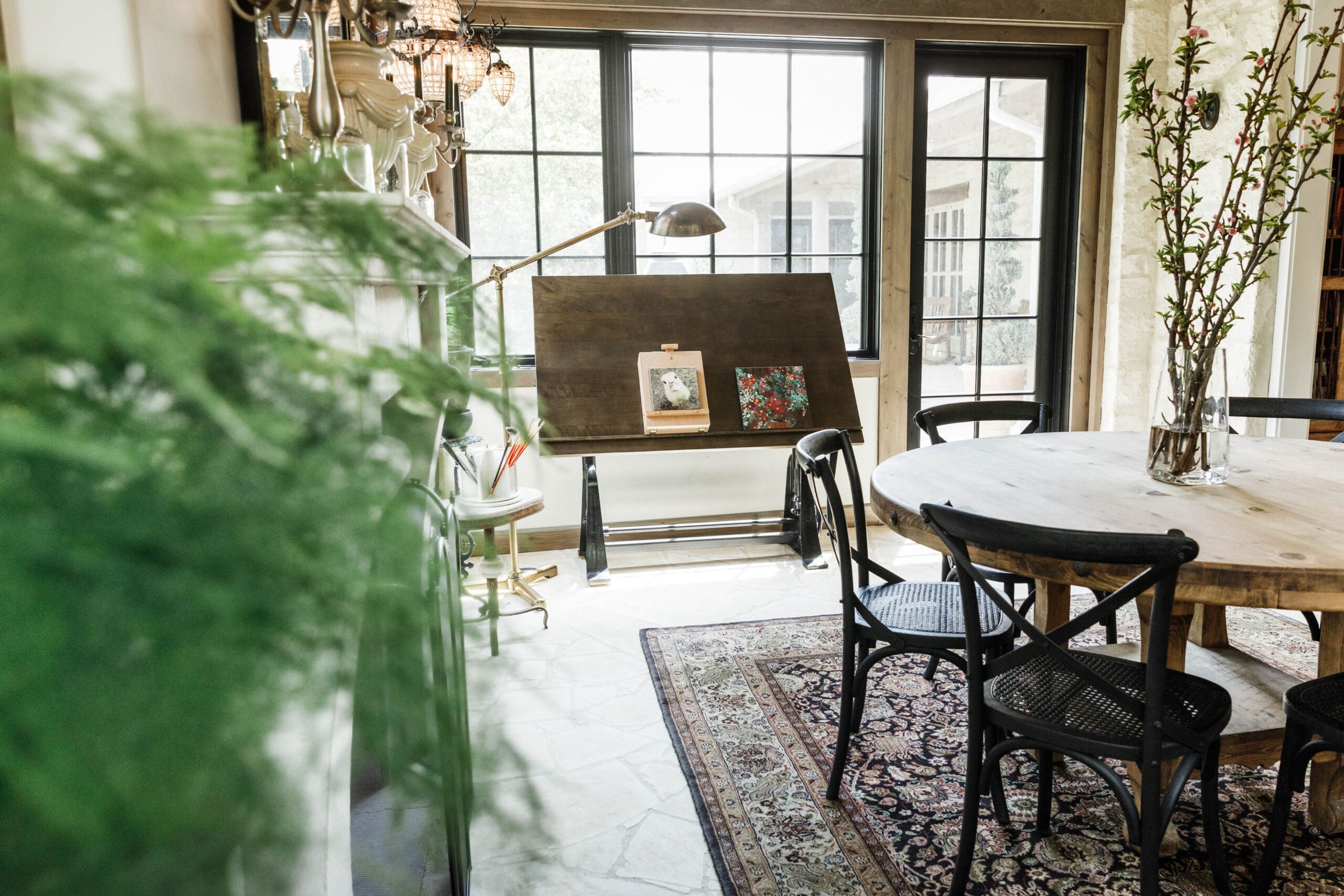
- Natural light
- Fresh air and ventilation
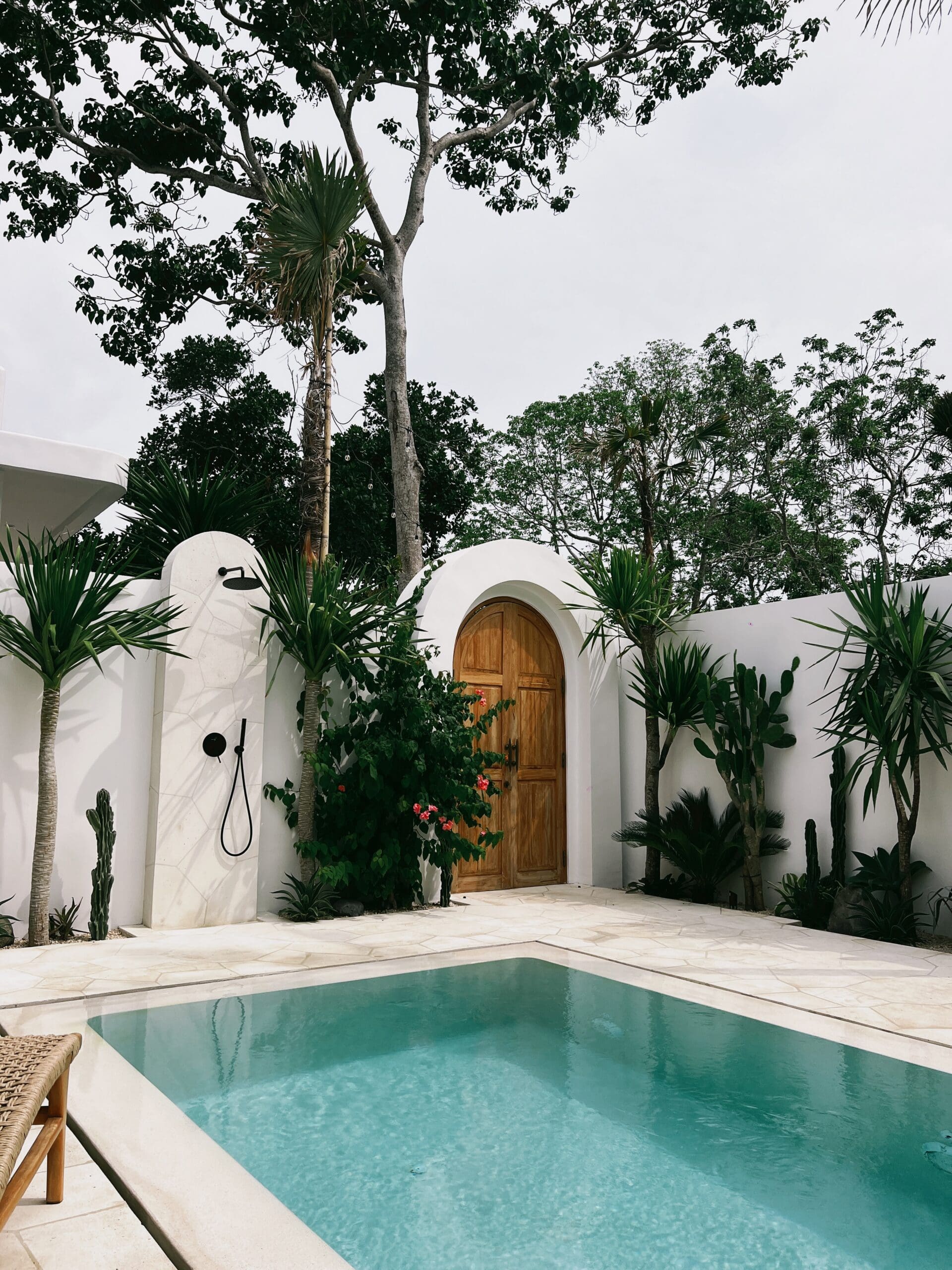
- Plants and greenery
- Water elements
- Views to the outdoors
Biophilic design ideas for hospitality owners:
- Remove anything blocking natural daylight
- Add real plants to guest-facing areas
- Open windows or doors when possible
- Create one intentional visual connection to outdoors
Ask yourself:
Where does nature already want to enter this space—and how can I support it?
2. Natural Materials & Sensory Texture
Humans instinctively respond to natural materials because they signal safety and grounding at a biological level.
Examples include:
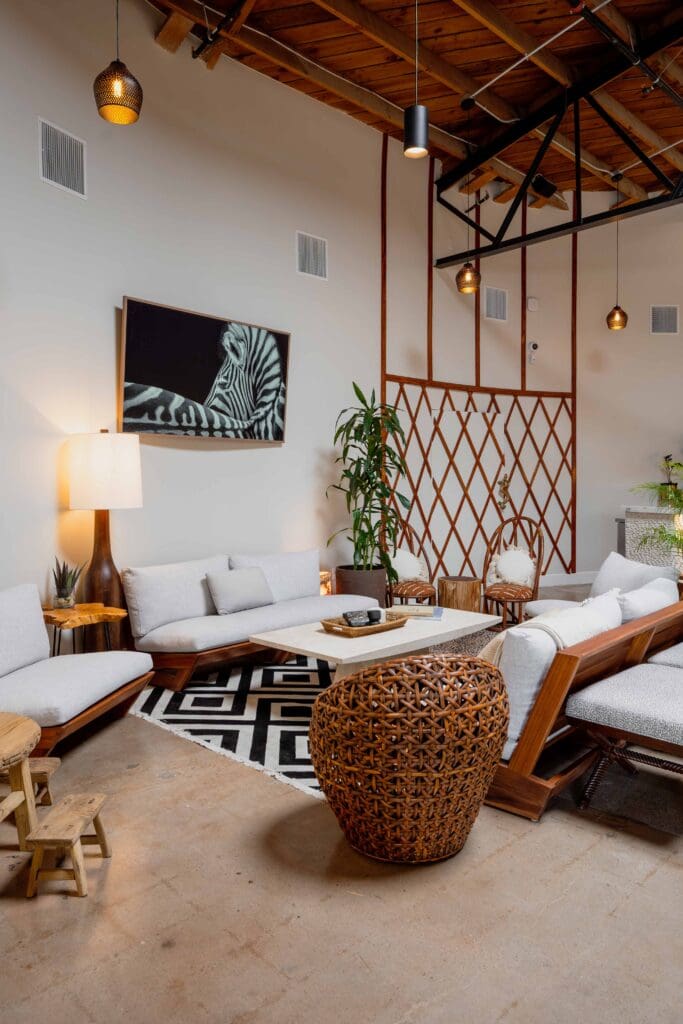
- Wood
- Stone
- Clay
- Linen
- Wool
Simple biophilic design upgrades:
- Replace glossy or plastic finishes with matte surfaces
- Introduce wood or stone through furniture or accessories
- Use natural textiles for table linens or cushions
- Reduce overly reflective or synthetic materials
These changes are subtle—but powerful.
3. Flow, Rhythm & Nature-Inspired Patterns
Nature isn’t rigid, and hospitality spaces shouldn’t feel rigid either.
This principle focuses on:
- Clear circulation paths
- Intuitive layout and wayfinding
- Organic shapes and curves
- A balance of openness and intimacy
Try this:
- Walk your space as a first-time guest
- Identify where movement feels awkward or confusing
- Create moments of coziness and expansion
- Use layered lighting instead of one flat light source
Design for how people move through your space, not just how it photographs.
Common Misconceptions About Biophilic Design
Biophilic design does not require:
- A renovation
- A large budget
- A wellness-branded business
It also doesn’t require perfection.
Biophilic design is about intention, not excess.
Even one thoughtful change can significantly improve guest experience.
Final Thoughts: Biophilic Design as Guest Care
Biophilic design is less about adding something new and more about remembering something ancient.
That humans are part of nature.
That our bodies are always responding to our surroundings.
And that space itself can be a form of care.
If you’re a hospitality owner-operator, start small. Choose one area of your space where connection, comfort, or belonging could be strengthened—and begin there.
Your guests may not consciously notice what you changed.
But they will feel it—and that’s what they’ll remember.
References & Further Reading
- Wilson, E.O. — Biophilia
- Kellert, S.R. — Biophilic Design: The Theory, Science, and Practice of Bringing Buildings to Life
- Terrapin Bright Green — The Economics of Biophilia
- Ulrich, R.S. (1984) — View through a window may influence recovery from surgery




Read the Comments +